


By: Natalia Finnis-Smart
Recently, there have been ongoing discussions around professional athletes and their mental health. These conversations first arose when four-time Grand Slam Champion, Naomi Osaka, announced her decision not to participate in post-match press conferences during the French Open in May of this year.
Naomi Osaka Speaks Out on Athlete’s Mental Health
The tennis star expressed how “people have no regard for athlete’s mental health,” and this “whole situation is kicking a person while they’re down.” She signed off with her wish that whatever amount she’d face fines for would be donated to a mental health charity.
The Grand Slam Tournaments Organizations responded to Osaka’s post asserting that she could face further consequences for routinely missing these press conferences, leading to more hefty fines and tournament suspensions due to their Code of Conduct.
She was fined $15,000 by Roland-Garros for missing her post-match conference after winning the tournament’s first-round against Patricia Maria Tig.
On May 30th, Osaka posted a cryptic tweet seemingly in response to the Grand Slam Organization’s statement denouncing her decision.
The following afternoon, she officially announced her withdrawal from the French Open.
Osaka also disclosed her reasons for the withdrawal, citing her “long bouts of depression since the US Open in 2018,” “social anxiety,” and “huge waves of anxiety” when speaking to the press.
She apologized to the journalists she may have offended by her decision not to do post-match press conferences and disclosed her prior, private apologies to the FTT (French Tennis Federation).
Oska expressed eagerness to work with the “Tour” (ATP/WTA) “to discuss ways [we] can make things better for the players, press, and fans.” Osaka also withdrew from Wimbledon, which took place the following month to “take some personal time with friends and family,” as stated by her agent Stuart Duguid.
Simone Biles Advocates for Mental Health
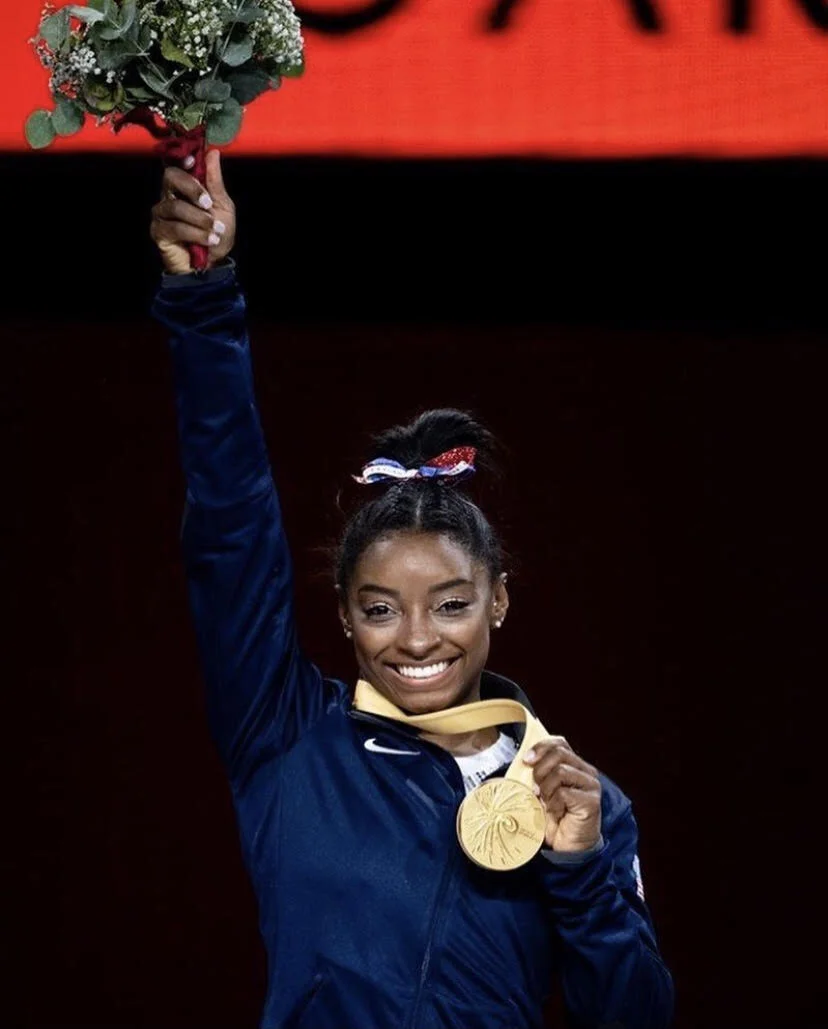
World No.1 gymnast and 6X Olympic medalist Simone Biles has continued the dialogue around athletes’ mental health.
She withdrew from the rest of her competitions during the Tokyo Olympics due to “mental health issues.” In a statement to the Associated Press, she explained how “we [athletes] also have to focus on ourselves…we’re human too.”
She continued by stating that athletes “have to protect our mind and our body, rather than just go out there and do what the world wants us to do.”
Biles attributed this feeling with being “the head star,” which she also expressed “isn’t an easy feat.” She later revealed that she has also been experiencing “the twisties (randomly)” and that she “literally can not tell up from down.”
Biles later took to her Instagram stories to answer questions about what she’s had to endure unexpectedly. She communicated her unsureness about when “the twisties” will go away and that she’s “going back to basics” in response to a question about her current ways of practicing.
She also took to Twitter to express her gratitude and thoughts on the matter.
As of now, USA Gymnastics announced that Biles would be competing in the balance beam final with teammate Suni Lee who won gold in the individual all-around set and bronze in the uneven bars.
Athletes Are Humans Not Robots
With celebrities and fans alike publicizing their support for athletes via social media, there have also been waves of criticism about Osaka’s and Biles’ decisions. This unnecessary banter shows how, in some aspects, society still hasn’t progressed beyond scolding others for their actions in an attempt to be spiteful and insensitive.
Sure, athletes like Naomi Osaka and Simone Biles are public figures whose words and actions will constantly be on display for the world to pick apart. However, their status does not warrant personal attacks just because of who they are. They’re human, too, as Simone stated. Humans can struggle with mental (and physical) health, just like everyone else.
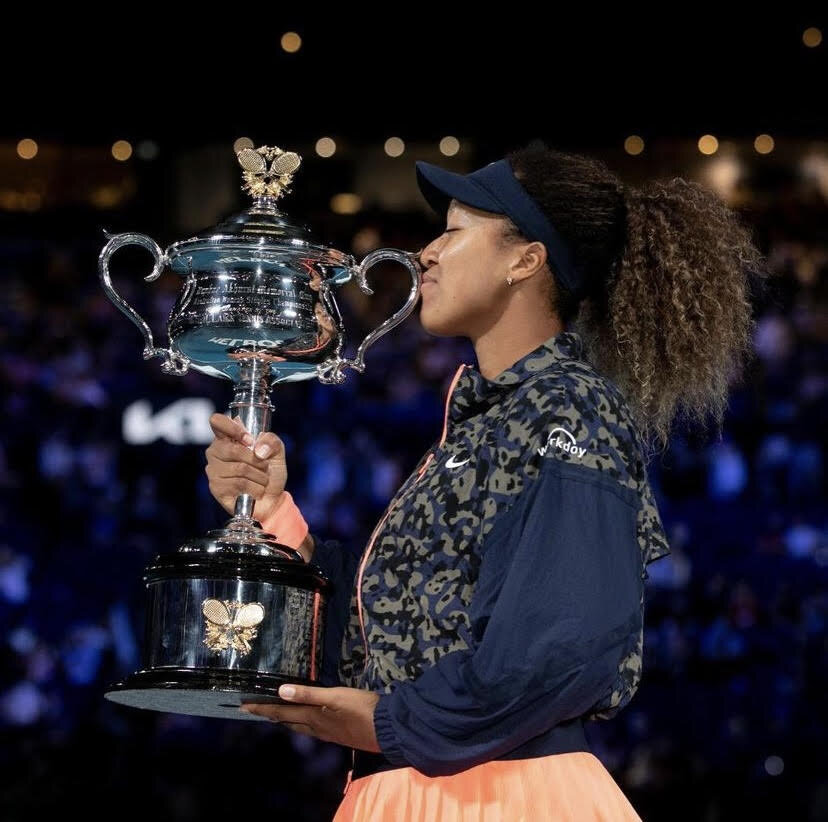
Their commitment to these respective sports already comes with immense challenges, especially when sustaining their title/ranking amongst hundreds of other competitors vying for that exact spot.
Years of practice to ensure they can return every 130 mph serve in any weather or doing perfect flips on a balance beam that’s about the width of your foot. They also have to consider the increased potential of injuring themselves, which could jeopardize their livelihoods and careers.
On top of all these facets, they have to deal with “sideline referees” who believe athletes like Osaka and Biles are not absolved from human emotions and life circumstances, but those who criticize somehow…are?
These criticisms further prove how athletes’ mental health is not always taken seriously, and Black women’s isn’t either. It is no secret that there is an expectation of Black women to suppress their emotions for the sake of being strong. In Osaka and Biles’ case, it is evident these reinforced stereotypes still exist even as uber-successful young athletes.
The standard they’re already held to automatically becomes elevated because of their identity and heightens during instances like these. Athletes deserve better. Naomi and Simone deserve better. Black women deserve better too.


