By: Lauryn Jiles
On October 14, 2001, Degrassi: The Next Generation, a Canadian teen drama series created by Linda Schuyler, premiered on television. The show is a spinoff of the popular ‘80s series, Degrassi Junior High and Degrassi High, and follows the children of beloved characters from those shows.
Over 14 seasons and nearly 400 episodes, Degrassi became a fan favorite and was so successful that it led to the spin-off, Degrassi: Next Class, which aired for four seasons on Netflix.
What made Degrassi so popular?

At its core, Degrassi: The Next Generation tells the story of a group of teenagers navigating the challenges of high school and young adulthood.
- The show tackled sensitive and controversial subjects, including abortion, sex, addiction, school shootings, suicide, rape, and mental health, earning it the reputation of a teenage soap opera.
- Degrassi quickly became one of Canada’s most-watched dramas and was among the highest-rated shows on TeenNick in the United States.
Stars of the show
Notable actors and entertainment artists gained incredible success after appearing in this beloved series, including Drake, who played Jimmy Brooks in Degrassi.
The CW’s The Vampire Diaries star Nina Dobrev and 90210’s Shenae Grimes also starred as Mia Jones and Darcy Edwards in the show. In 2018, many of the cast members reunited in Drake’s music video for “I’m Upset,” creating the ultimate cast reunion.
In this article, we explore how the show paved the way for other teen dramas through dynamic storylines and characters.
How Degrassi Paved the Way for Teen DramaMemorable Storylines and Challenging Topics
As one of the most forward-thinking TV dramas of the early 2000s, Degrassi boasts an array of incredible storylines. Among them is that of the beloved character Manny Santos, played by Cassie Steele.
- Over the course of the show, Manny experiences various highs and lows, including her dramatic transformation in season three, her decision to terminate a pregnancy, and her aspirations of becoming an actress through plastic surgery.
- These complex storylines allowed Manny to become one of the most memorable characters in the series, demonstrating the show’s commitment to exploring challenging topics with sensitivity and honesty.

Emma Nelson, played by Miriam McDonald, is another beloved character that is considered the show’s main protagonist. Emma’s journey on the show is a testament to Degrassi’s ability to portray complex, real-world issues in a thoughtful and authentic way.
- In the very first episode, Emma plans to meet her “online boyfriend” despite warnings from her friends about the risks of meeting strangers. Emma is convinced that her boyfriend is a regular guy, only to discover that he is a predator.
- Her other storylines that deeply resonated with fans include meeting her biological father, grappling with an eating disorder, and contracting a sexually transmitted disease.
- These plotlines allowed Emma to grow and develop as a character, while also bringing attention to important issues such as online safety, mental health, and sexual health.
Degrassi’s Influence on TV Dramas
Degrassi’s impact on television dramas since its premiere in 2001 cannot be denied. While a few shows touched on subjects like sex and growing up, Degrassi blazed a trail by addressing then-controversial topics such as suicide, transgender teens, and toxic relationships, and more.
This set a precedent for other shows to follow and helped bring important conversations into the mainstream.
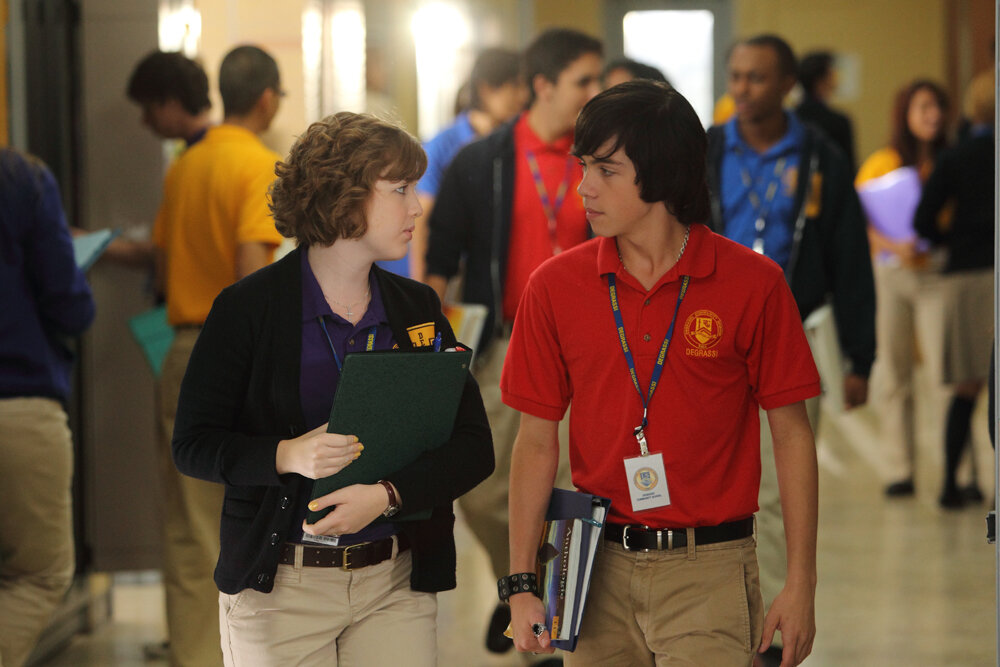
Degrassi not only takes its name from the school attended by its characters but also delves into their personal struggles outside of the classroom.
This focus on their lives beyond school resonated with viewers, and the show’s influence paved the way for other programs such as Euphoria, The Fosters, Skins, Sex Education, and Gossip Girl to tackle controversial storylines.
In addition to its thematic appeal, Degrassi’s popularity also stemmed from its casting of actual pre-teens and teenagers, mirroring the ages of their characters. This aspect was especially meaningful to young viewers, who could see themselves in the characters and relate to them more authentically.
In contrast, most TV shows cast older actors, perpetuating an unrealistic beauty standard that can be alienating to their teenage audience.
Degrassi’s Legacy
Degrassi: The Next Generation revolutionized the world of teen dramas, paving the way for shows that explore complex themes and issues affecting young people today.
With its frank portrayal of topics like sex, mental health, and addiction, the show tackled subjects that had never been addressed on television before.
Its influence can be seen in the teen dramas that have followed in its footsteps, from Riverdale to Euphoria. As we celebrate the 19th anniversary of this groundbreaking series, we can look back with admiration for its impact and the way it helped shape teen dramas.